House Plants
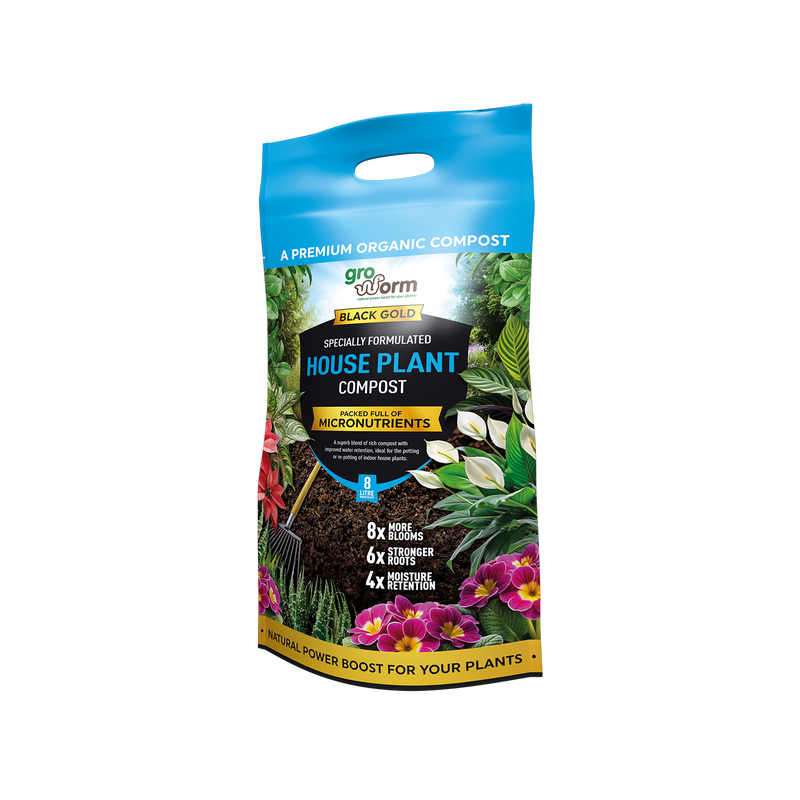
House plant compost is a light, free-draining potting mix made for plants grown indoors in containers, where garden soil would quickly compact and drown the roots. Gro Worm's house plant compost is enriched with pure worm casts and balanced for pH, so indoor plants root well and stay healthy for longer.
Not sure if you need it? If you grow anything in a pot indoors, from pothos and peace lilies to monsteras and ferns, a proper house plant compost gives far better results than garden soil or leftover multipurpose.
Growing house plants: common questions
What compost is best for house plants?
Most house plants want a light, open, free-draining potting mix rather than dense garden soil. Indoors there is no rain to flush the pot and no worms to keep the mix open, so a heavy compost stays wet, compacts and starves the roots of air. A good house plant compost holds enough moisture to keep the plant going between waterings while still letting excess drain away freely, which is the balance indoor plants need to thrive.
Why shouldn't you use garden soil for indoor plants?
Garden soil is too heavy and dense for containers. Outdoors it is kept open by worms, weather and a whole web of soil life; scooped into a pot on a windowsill it simply compacts, holds water and suffocates the roots. It can also carry weed seeds, fungus gnats and soil-borne diseases into your home. A dedicated house plant compost is lighter, cleaner and formulated to drain properly in a pot.
How often should you water a house plant?
Most house plants are killed by kindness. As a rule, water thoroughly, then wait until the top few centimetres of compost feel dry before watering again, rather than giving a little every day. Plants need much less in winter when growth slows. Push a finger into the compost to check before reaching for the watering can, and never leave the pot sitting in a saucer of water, which is the fastest way to rot the roots.
When and how do you repot a house plant?
Repot every one to two years, or when roots start circling the bottom or poking out of the drainage holes. Spring, as growth picks up, is the ideal time. Move up just one pot size, because too large a pot holds a mass of wet compost around a small root ball. Water the plant first, ease it out, tease the roots gently, and settle it into fresh house plant compost at the same depth it was growing before.
How much light do house plants need?
More than most rooms naturally provide. The majority of popular house plants come from bright, dappled forest floors, so they want plenty of indirect light but not harsh, direct midday sun, which scorches the leaves. A spot near a bright window is usually ideal. If a plant becomes leggy and pale, or leans hard towards the glass, it is telling you it needs more light.
How do you feed house plants?
Feed during the growing season, roughly spring to early autumn, and ease off in winter when most house plants rest. Fresh compost carries enough nutrition for the first several weeks, so there is no need to feed straight after repotting. Use a house plant or general liquid feed at the recommended strength, and always feed onto damp compost rather than bone-dry compost to avoid scorching the roots.
What makes Gro Worm house plant compost different?
Ours is enriched with pure worm casts, which improve structure, help the compost hold moisture without turning soggy, and make nutrients easier for the plant to take up. It is also balanced for pH so indoor plants can access what they need. The result is a lighter, cleaner, more forgiving compost that helps house plants establish strong roots and hold their condition for longer.